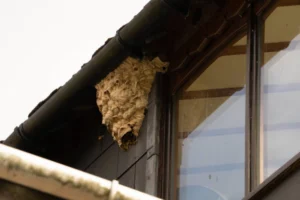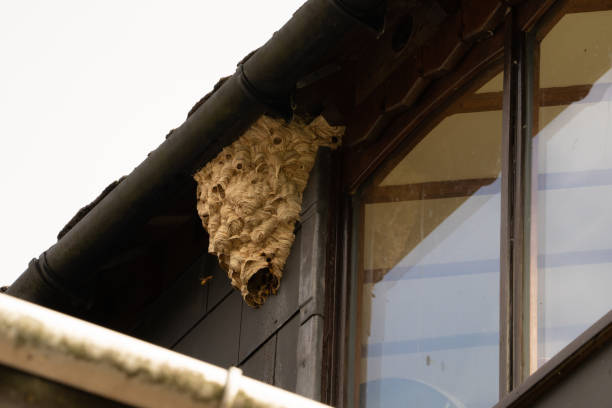
You noticed more wasps than usual, then one day you found where they were coming from. Maybe it is under the eaves, inside a wall void, tucked into a shrub, or hanging near the garage. That kind of discovery can change how you use your own home, and many homeowners start searching for Passaic wasp nest removal. You start watching every step, keeping kids and pets inside, and wondering if one wrong move will turn into a swarm.
Wasp nest removal in New Jersey is one of those jobs that sounds manageable until you are standing a few feet from an active nest. Then the risk feels very real, because it is. Some nests stay small and out of the way. Others grow fast in late summer, when colonies are larger and wasps are more defensive. If the nest is attached to your house, hidden in a wall, or close to doors, play areas, or walkways, professional help usually makes the most sense.
Late summer wasp activity in New Jersey raises the risk
New Jersey homeowners often run into wasp problems in the warm months, especially toward late summer and early fall. Rutgers has noted that yellowjackets and other stinging pests become a bigger concern during this period because colony numbers peak and food-seeking behavior increases. Their late summer pest advisory gives useful local context for what people see around homes, patios, trash areas, and yards.
This is where people get into trouble. A small paper nest under a porch rail does not look like much, so someone grabs a can of spray at dusk and hopes for the best. If the nest is actually larger than it appears, or if it belongs to yellowjackets nesting in a void or underground, that quick fix can end with multiple stings and angry wasps spreading through the area. If anyone in the home has a sting allergy, the stakes are even higher.
You do not need to panic, but you do need to take the situation seriously. Wasp nest removal is not just about knocking down a visible structure. It is about identifying the insect, locating the full nest, treating it safely, and reducing the chance that surviving wasps return to the same spot.
Hidden nests and structural nesting call for professional pest control
Not every nest is out in the open. Wasps can build in attics, soffits, wall voids, sheds, playsets, and dense shrubs. Yellowjackets may nest underground or enter through tiny exterior gaps. You may only see a steady line of traffic going in and out of one crack near a window frame or roofline. That usually means the visible activity is just part of the problem.
At that point, DIY treatment often misses the nest core. Spraying the entrance can trap agitated wasps inside a wall, force them into living spaces, or leave the colony active. Then you are not just dealing with a nest outdoors. You are dealing with wasps showing up indoors where they feel impossible to predict.
Rutgers Cooperative Extension offers guidance on stinging insects and the habits that make them hard to control once established. Their resources on bees, wasps, and related insects help explain why proper identification matters before any treatment begins.
DIY and professional wasp nest removal are not equal in risk
There is a reason homeowners hesitate before handling a nest on their own. The main issue is distance and exposure. You need to get close enough to treat the nest, and once wasps feel threatened, they defend it fast. A ladder makes the situation worse. So does poor lighting, blocked escape routes, or a nest near a doorway where people pass through without noticing.
| Situation | DIY Removal | Professional Pest Control |
|---|---|---|
| Small, exposed early nest away from people | May be possible, but sting risk remains | Safer option if you want full removal and less guesswork |
| Nest in wall, attic, soffit, or underground | Often incomplete and can drive wasps deeper into structure | Better access, correct products, and proper identification |
| Nest near doors, decks, play areas, or pet spaces | High chance of disturbing active traffic | Reduces risk to family members during treatment |
| Anyone in home has sting allergy | Unsafe | Strong reason to call right away |
| Large nest in late summer | Higher defensive behavior and more insects to manage | Usually the safer and more reliable choice |
Professional pest control becomes the clear choice when the nest is hidden, elevated, active around daily foot traffic, or large enough that you cannot judge its size from the outside. That is especially true in New Jersey when late season colonies are at their fullest.
Three steps to take before the nest gets worse
1. Watch from a distance and track the flight path. Do not stand under the nest or near the entry point. Stay back and observe where wasps are entering and exiting. This helps confirm whether you are dealing with an exposed paper nest or a hidden colony inside a structure or the ground.
2. Keep people and pets away from the area. Close off that part of the yard if needed. Skip mowing, trimming, or pressure washing nearby. Vibrations and sudden movement can trigger defensive behavior fast. If the nest is near a door, use another entrance until the problem is handled.
3. Know when to stop and call for help. If the nest is hard to reach, larger than a softball, built into your home, or active during the day with steady traffic, call a professional for wasp extermination services in New Jersey. Rutgers also shares practical home and yard management advice in its fact sheets, including prevention steps that reduce pest pressure around structures. Their guidance on managing pests around the home environment is a good place to start.
Safe wasp nest removal protects your home and your routine
A wasp problem does more than create a nuisance. It changes how you move through your home and yard, and it can put people at real risk. If the nest is small, isolated, and easy to identify, some homeowners may try to manage it. Once the nest is hidden, elevated, close to living spaces, or active late in the season, professional help is usually the safer call.
You do not need to wait until someone gets stung to take it seriously. Safe wasp removal is about timing, identification, and keeping the situation from spreading into something harder to control. If the nest is in or around your home and you are unsure how risky it is, reach out for professional pest control before the problem gets worse.
https://grammarheist.com/why-blood-work-is-standard-in-animal-hospitals/
https://grammarheist.com/the-role-of-accountants-in-preparing-audit-ready-financials/