Table Of Contents
- Why Word-Fill Puzzles Feel Different From Standard Crosswords
- How Guessing Supports Memory
- Vocabulary Skills That Grow Through Practice
- Ways These Puzzles Build Focus
- How To Start With The Right Difficulty
- A Simple 15-Minute Solving Routine
- Common Mistakes That Slow Progress
- How Families, Students, and Older Adults Can Use Them
- What Research Says About Word Puzzles
- Make Small Practice Sessions Count
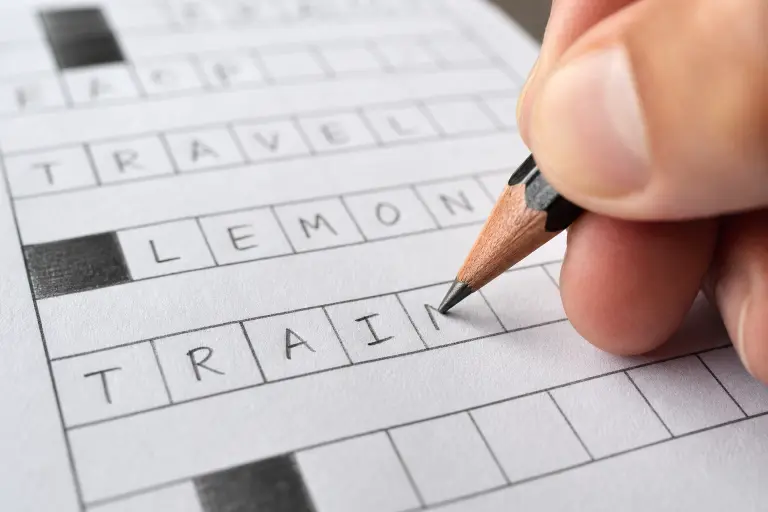
Word-fill puzzles transform a familiar collection of letters into an engaging and manageable challenge. Rather than depending solely on trivia clues, solvers can use word length, crossing letters, spelling patterns, and process of elimination to determine the correct entries. Exploring different fill-in formats, such as those featured at https://www.pennydellpuzzles.com/fill-ins/, can reveal how this puzzle style offers an enjoyable challenge for both beginners and experienced word-game enthusiasts.
The appeal is simple: each answer creates useful information for the next one. A short session can exercise recall, spelling, attention, and flexible thinking without feeling like formal homework. The goal is not perfect performance. It is to make an attempt, test the fit, learn from feedback, and keep moving.
Why Word-Fill Puzzles Feel Different From Standard Crosswords
In a typical word-fill puzzle, the solver receives a bank of words and a diagram with spaces of different lengths. The task is to decide which word belongs in each space. Unlike a clue-based crossword, the challenge comes less from interpreting a clue and more from recognizing word shapes, comparing lengths, and using letters shared by connected entries.
This makes the format feel more supported than an open-ended crossword, while still requiring deduction. Word searches focus on spotting a completed word, and anagrams focus on rearranging letters. Word-fill puzzles combine both recognition and placement. Familiar words often provide an easy start, while longer or similar-looking entries can keep skilled solvers engaged.
How Guessing Supports Memory
Making a reasonable guess before checking the answer can be more useful than simply reading the solution. Retrieval requires the mind to search for a possible word, compare it against the available letters, and commit to an answer. Even when the guess is wrong, immediate correction can make the right answer more memorable.
A 2026 National University of Singapore study on guessing before learning tested 341 adults across four controlled experiments. Participants who made a guess and then received feedback generally recalled new Spanish vocabulary more accurately than participants who only studied the word-picture pair. A puzzle is not identical to a language lesson, but the same practical habit applies: attempt the answer first, then check and learn from the result.
Vocabulary Skills That Grow Through Practice
A regular word-fill habit can give several language skills a gentle workout:
- Recognizing familiar words more quickly.
- Noticing prefixes, suffixes, and common letter combinations.
- Separating words with similar spellings.
- Using length and crossing letters to narrow possibilities.
- Recalling words that may not appear in daily conversation.
- Becoming more comfortable with unfamiliar terms through repeated exposure.
For example, a solver may blank on a less common word the first time it appears. After seeing it in several puzzles, its spelling begins to look familiar, and the solver may be more likely to recognize it in a book, article, or conversation. Checking a dictionary after solving can add meaning and pronunciation to that growing familiarity.
Ways These Puzzles Build Focus
Word-fill puzzles give the mind one clear task. The solver scans the word list, holds a few possible answers in mind, compares letter counts, and decides where each entry belongs. That creates a short stretch of sustained attention without demanding a lengthy study session.
- Start with one corner or section rather than tackling the whole page at once.
- Put the phone in another room for a 10- to 15-minute session.
- Use a pencil so that uncertain answers can be changed easily.
- Pause briefly if the same space is causing frustration, then return with fresh attention.
How To Start With The Right Difficulty
- Choose a puzzle that you can partly complete without help.
- Place the shortest or most familiar words first.
- Use crossing letters to test uncertain answers.
- Mark difficult spaces and return to them later.
- Review missed answers after finishing.
Difficulty matters. A puzzle that is too easy may become dull, while one that is far too hard can lead to random guessing and frustration. A good level offers steady progress along with a few useful struggles. Those moments encourage careful thinking without making the activity feel like a test.
A Simple 15-Minute Solving Routine
- Minutes 1 to 3: Scan the puzzle and enter obvious answers.
- Minutes 4 to 8: Use word length and letter patterns for medium-difficulty entries.
- Minutes 9 to 12: Recheck uncertain words against connected spaces.
- Minutes 13 to 15: Check remaining answers and write down one new word.
Track progress by time spent, completed sections, or words learned, rather than speed alone. A slower session that teaches a new spelling or helps you notice a useful pattern is still productive.
Common Mistakes That Slow Progress
- Forcing an answer because it almost fits.
- Ignoring the number of spaces available.
- Failing to use the letters supplied by nearby answers.
- Checking the solution before making a real attempt.
- Refusing to check the solution at all.
- Choosing puzzles well above your current comfort level.
Checking answers is part of learning, not a failure. When an entry is wrong, take a moment to see why the correct word fits better. Notice its length, spelling, and the letters that ruled out the original guess. That small review helps turn a mistake into a future advantage.
How Families, Students, and Older Adults Can Use Them
For Families
Try solving together for 10 minutes. One person can read the word bank while another suggests placements. The shared task encourages conversation, cooperation, and low-pressure problem-solving.
For Students
Use a puzzle as a short break between study blocks. It can reinforce spelling and recall, but it should complement, not replace, reading, writing, and focused review.
For Older Adults
Choose clear, large print when needed, use comfortable lighting, and keep the pace relaxed. The activity should feel enjoyable and engaging, not like an exam.
What Research Says About Word Puzzles
Research on puzzles should be interpreted carefully. In a randomized puzzle study, 107 older adults with mild cognitive impairment completed either computerized crossword training or computerized cognitive games for 12 weeks, followed by booster sessions and a follow-up. The crossword group performed better on the study’s primary cognitive outcome at 12 weeks and 78 weeks.
Those findings concern a specific group and a specific crossword program, not every kind of word puzzle. They do not prove that puzzles prevent dementia or replace medical care. Sleep, physical activity, social connection, reading, and appropriate health care all matter. Word-fill puzzles are best viewed as one enjoyable part of a broader routine that keeps the mind active.
Make Small Practice Sessions Count
Word-fill puzzles provide a practical way to practice recall, spelling, focus, and pattern recognition. With the right level of challenge, a pencil, and a few minutes of quiet time, each puzzle becomes an opportunity to guess, test, correct, and improve. A consistent 10- or 15-minute routine can make lifelong learning feel both manageable and fun.
Also Read