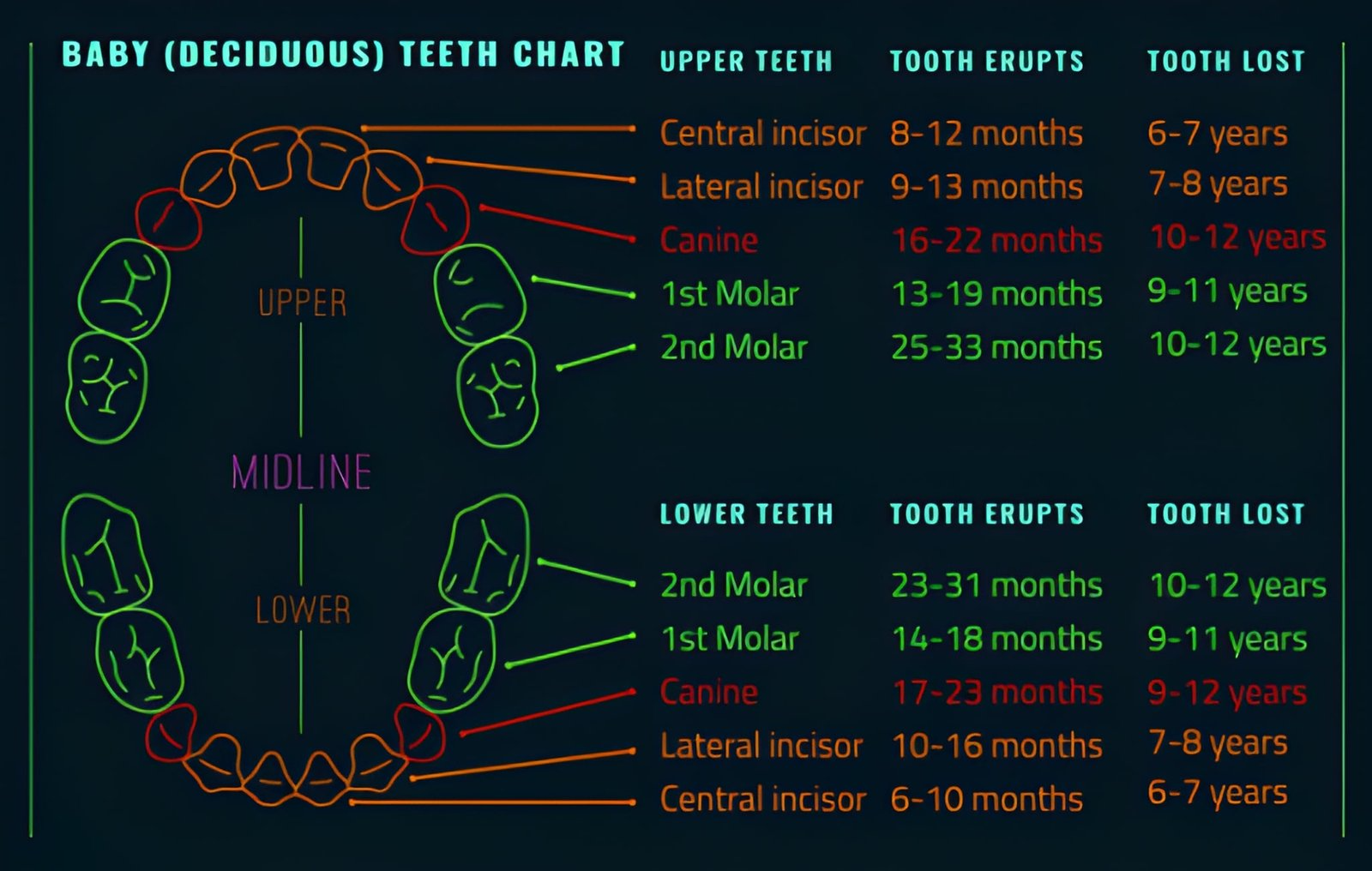
You might be staring at an eruption chart right now, wondering why your child’s teeth are not following the picture-perfect schedule and whether you should see a pediatric dentist for children in NYC. Maybe your friend’s toddler already has a mouth full of teeth while your child is still flashing a mostly gummy smile. Or maybe the opposite is true, and teeth are popping in so fast you can hardly keep up.
It can feel unsettling. You want to trust the charts, yet your child is not a chart. You might be asking yourself whether you missed something, whether you should have called a pediatric dentist earlier, or whether this is just “one of those things” that works itself out.
Here is the simple overview to keep in mind. Tooth eruption charts are helpful guides, not strict deadlines. There is a wide range of normal. What matters most is not whether each tooth arrives on the exact month listed, but whether your child’s teeth are generally progressing, staying healthy, and getting the care they need as they appear. A calm, watchful approach, backed by good information and a trusted pediatric dentist, is usually enough to keep your child on a healthy path.
Are eruption charts failing you, or are they only part of the story?
Standard eruption charts describe when baby teeth and adult teeth usually appear. For example, many charts show the first lower front teeth around 6 months, the last baby molars around 2 to 3 years, and the first adult molars around age 6. That can look very precise on paper, which is exactly why it feels stressful when your child does not match those numbers.
Here is where the tension starts. You see a chart that looks exact. Then you see a real child who is not exact at all. Some kids get their first tooth at 4 months. Some get it at 12 months. Some have a full set of baby teeth at 26 months. Others are still waiting on a couple at 36 months. None of those patterns are automatically a problem.
Because of this gap between the chart and your reality, you might start to worry. Is late eruption a sign of a deeper issue? Does early eruption mean higher risk of cavities? Are crooked baby teeth a sign that braces are guaranteed later? The questions come quickly once worry gets started.
This is where a pediatric dentist becomes especially helpful. A chart can tell you what is common. A pediatric dentist can tell you what is normal for your child. They look not only at timing, but also at symmetry, spacing, bite, and cleaning habits. They also help you understand which differences are harmless and which ones deserve closer follow-up.
What can actually go wrong if the tooth timeline is off?
When you look past the charts and into everyday life, the concerns usually fall into a few categories. Emotional stress, health risks, and practical or financial worries.
Emotionally, it is hard watching your child feel “behind.” Maybe your preschooler is the only one still missing front teeth in class pictures, or the only one whose adult teeth are not coming in yet. You might notice your child commenting on their smile, or avoiding photos, long before a dentist ever raises a concern.
From a health point of view, the biggest issue is not the timing itself, but what might come with it. For example, if baby teeth stick around too long in one area, adult teeth might erupt in odd positions or get trapped. If teeth arrive earlier than expected and brushing is not yet part of the daily routine, the risk of cavities goes up. According to CDC data on children’s oral health, more than half of kids between 6 and 8 already have had a cavity in a baby tooth, which shows how quickly problems can start once teeth appear. You can see more of these statistics in the CDC’s oral health facts and stats.
Then there are the practical worries. You might wonder whether you will face orthodontic treatment sooner or later than expected, or whether you need extra X-rays, or whether an extraction might be needed if a baby tooth refuses to move. These questions can feel heavy when you are already tired from daily parenting tasks.
So where does that leave you when the chart and your child do not match up neatly?
Comparing the chart to real life: what should you actually watch for?
To make eruption charts more useful, it helps to see them as a guiding tool rather than a scorecard. Instead of asking “Are we exactly on schedule,” it is more helpful to ask “Are we moving in the right direction, and are the teeth we do have healthy and cared for?”
The table below compares how parents often use eruption charts with how a pediatric dentist uses the same information during an exam. This can help you see where to focus your energy.
| Tooth Timeline Question | Common Parent Focus | Pediatric Dentist Focus |
|---|---|---|
| Timing of eruption | “Are we exactly on the age listed on the chart?” | Is the overall pattern within a broad normal range? Is there progress from year to year? |
| Missing or late teeth | Worry that late teeth always mean a serious problem. | Check X-rays if needed. Look for tooth buds. Assess growth, medical history, and family patterns. |
| Early teeth | Fear that early teeth will always cause cavities or crooked smiles. | Reinforce brushing and fluoride exposure. Monitor spacing and bite. Adjust care, not panic. |
| Crooked or crowded baby teeth | Assume braces are guaranteed and urgent. | Watch growth of jaw and face over time. Plan the right moment to refer for orthodontic care. |
| Home care needs | Focus on timing, not cleaning. | Emphasize daily brushing with fluoride toothpaste, diet, and preventive visits, regardless of timing. |
When you view your child’s tooth eruption timeline through this lens, the picture becomes less about hitting dates and more about supporting healthy development at each stage.
How can you support your child’s teeth at every stage, no matter what the chart says?
Even if the exact timing feels uncertain, there are clear steps you can take that make a real difference for your child’s mouth right now.
1. Build simple, steady home habits as soon as the first tooth appears
You do not need a full mouth of teeth to start good care. As soon as the first tooth shows up, use a soft baby toothbrush or clean cloth twice a day. For children under 3, use only a smear of fluoride toothpaste about the size of a grain of rice. For older kids who can spit, use a pea-sized amount.
The CDC’s guidance on oral health tips for children explains how early habits and fluoride work together to prevent decay. These small daily steps matter far more than whether the first molar came in at 15 months or 19 months.
2. Use eruption charts as a conversation starter, not a verdict
Charts are still useful when they are used in the right way. You can print a simple chart, mark when each tooth appears, and bring it to your child’s pediatric dentist. This turns the chart into a shared tool rather than a silent judge on your fridge.
If your child’s pattern is very early or very late in several areas, a pediatric dentist might suggest X-rays or more frequent checkups. That is not a sign that something is “wrong” with your child. It is simply a way to make sure there are no hidden issues and to catch any concerns gently and early.
You can also ask about fluoride, which strengthens the enamel and protects against cavities. The CDC offers clear information about how fluoride helps protect teeth, which can reassure you that you are giving your child an extra layer of protection regardless of eruption timing.
3. Watch for red flags, and seek a pediatric dentist’s eyes early
While most variations are harmless, there are a few signs that deserve attention. These include no teeth at all by about 18 months, sudden changes in tooth color, obvious pain when chewing, teeth that erupt far behind other teeth on the same side, or adult teeth that appear but baby teeth in that spot never loosen.
These situations do not always mean something serious, yet they are worth checking. A pediatric dentist can examine your child, look at growth patterns, and reassure you or map out a simple plan. Early visits also help your child feel at ease in the dental chair, which makes future care smoother.
If you think of these visits as part of a long-term partnership, rather than a one-time fix, the whole journey from baby teeth to adult smile feels less overwhelming. You have someone watching the same timeline you are, but with training and calm distance.
Finding peace with your child’s unique tooth timeline
It is easy to feel judged by charts, milestones, and other children’s smiles. You want to do right by your child, and you do not want to overlook something important. That pressure is real, and it deserves respect.
Even so, your child’s mouth is telling its own story. A standard chart can offer a rough outline, yet your child fills in the details. As long as teeth are moving forward over time, being cleaned daily, and checked by a pediatric dentist, small differences in timing are usually just that, small differences.
When you focus on steady habits, informed questions, and regular pediatric dental care, you are already doing the most important work. You are not just tracking teeth. You are protecting your child’s comfort, confidence, and long-term health through every stage of their tooth development journey and every visit with a trusted pediatric dentist.
Read more: The Role Of Cosmetic Dentists In Patient Confidence
How Business Attorneys Assist With Intellectual Property Protection
4 Reasons Parents Choose General Dentists For Their Children’s Care