Key Takeaways
- Cleaning schedules should reflect a workplace’s size, traffic, work type, and operating hours.
- High-touch and service areas usually need more frequent attention than low-use spaces.
- Cleaning, sanitizing, and disinfecting serve different purposes and should not be treated as identical tasks.
- Clear labels, worker training, ventilation, and safe product storage support a healthier work environment.
- Checklists, inspections, and employee feedback help keep the plan useful over time.
New York workplaces operate at a fast pace, with busy lobbies, shared elevators, compact break rooms, changing weather, and frequent visitor traffic. A written cleaning plan helps property managers and business owners keep those conditions from turning into missed tasks, unsafe floors, or avoidable disruption. Working with a janitorial cleaning company in New York can also help organizations build a schedule that reflects how their specific building is used. The strongest plans are not based solely on what looks dirty at the end of the day. They account for foot traffic, shared surfaces, work schedules, restroom demand, seasonal conditions at entryways, and the needs of employees and visitors. Whether the workplace is a Midtown office, a Brooklyn warehouse, or a professional suite in Queens, the goal is the same: make cleaning consistent, practical, and easy to verify.
Why A Written Cleaning Plan Matters
Cleaning based only on complaints or visible mess can leave important tasks unfinished. A written plan establishes expectations for each area, identifies who is responsible, and makes it easier to respond when spills, illness, weather, or an unusually busy day change the building’s needs. It also gives managers a straightforward way to inspect completed work and address recurring issues before they become larger problems.
Step 1: Assess The Workplace
Start with a walkthrough rather than a generic checklist. Note the building layout, number of employees and visitors, daily traffic patterns, restroom use, break-room activity, shared desks, conference rooms, elevators, and low-traffic periods. Consider special spaces separately, including kitchens, clinics, production areas, laboratories, or childcare settings, because those environments may have requirements beyond a standard office plan.
Questions To Review During The Walkthrough
- Which entrances and corridors receive the most traffic?
- Where do people eat, gather, or use shared equipment?
- Which surfaces are touched repeatedly throughout the day?
- When can cleaning occur with minimal interruption?
- Do wet winter conditions or seasonal debris increase floor-care needs?
Step 2: Divide The Building Into Cleaning Zones
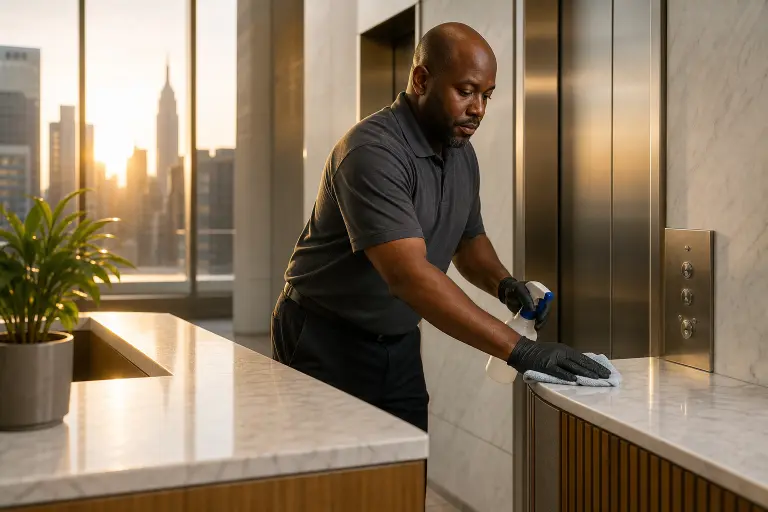
Zones make priorities easier to manage. Entrances, reception areas, elevators, hallways, and shared meeting rooms belong in high-traffic zones. Door handles, light switches, railings, elevator buttons, counters, and shared devices are high-touch points. Personal work areas, restrooms, kitchens, break rooms, waste stations, storage rooms, and archives should each have their own task lists and service frequencies.
Step 3: Set Daily, Weekly, And Monthly Tasks
Frequency should be based on use, not habit. A restroom used by a full office requires a different schedule than a lightly used records room. Revisit the schedule after changes in occupancy, layout, staffing, or business hours.
Daily Tasks
- Remove trash and recycling, clean visible spills, and check walkways for slip or trip hazards.
- Clean restrooms, replenish paper goods and soap, and service break-room counters, sinks, and frequently used appliances.
- Clean high-touch surfaces according to how often they are used.
Weekly And Monthly Tasks
- Dust vents, ledges, partitions, fixtures, baseboards, and hard-to-reach areas.
- Clean interior glass, inspect furniture edges and corners, and address recurring odor, moisture, or staining concerns.
- Review carpets, upholstery, floor finishes, windows, supply storage, and entryway care needs.
Step 4: Use Cleaning And Disinfection Correctly
Cleaning removes dirt and lowers the number of germs on surfaces. Sanitizing reduces germs after cleaning, while disinfecting is intended to kill harmful germs that remain on a surface after it has been cleaned. The CDC’s guidance for cleaning and disinfecting facilities advises regular cleaning of high-touch surfaces and notes that cleaning should occur before sanitizing or disinfecting. Use products only as directed. Confirm that a product is appropriate for the surface, follow dilution and contact-time instructions, and keep the surface wet for the required time when disinfecting. Never mix cleaning chemicals. Workers should have access to readable labels, safety data sheets, necessary protective equipment, and adequate ventilation while using cleaning products.
Step 5: Choose Products With Health And Environmental Goals In Mind
Do not rely on vague environmental marketing alone. The EPA Safer Choice program identifies products with ingredients reviewed for human health and environmental considerations, giving purchasing teams one useful factor to consider alongside product performance and facility needs.
- Review safety data sheets before introducing new chemicals.
- Limit unnecessary fragrance where it may affect occupant comfort.
- Use properly maintained microfiber tools and equipment suited to the task.
- Store concentrates securely, label secondary containers, and train staff on dilution and disposal.
Step 6: Plan Cleaning Around The Workday
A practical New York cleaning plan often combines daytime touch-up service with more detailed after-hours work. Schedule noisy floor care outside meetings, service restrooms and break rooms during lower-use windows, place warning signs around wet floors, and coordinate tasks around shift changes and visitor peaks. Keep an escalation process for spills, illness-related cleaning, broken dispensers, and urgent waste removal.
Step 7: Create A Simple Cleaning Checklist
A checklist can be digital or printed, but it should be easy for staff and supervisors to use. Include the room or zone, task, required product or equipment, frequency, assigned person or team, completion time, inspection status, and follow-up notes. This record makes skipped work easier to spot and gives teams a shared standard for service quality.
Step 8: Measure Results And Update The Plan
Review the plan regularly using inspections, supply use, service requests, incident reports, and employee feedback. Overflowing trash, untidy restrooms before the day ends, persistent odors, dusty surfaces, stained high-traffic floors, and repeated incomplete tasks are all signs that the schedule or staffing level may need adjustment.
Common Mistakes To Avoid
- Using the same schedule for every room.
- Focusing only on visible surfaces and ignoring shared touchpoints.
- Disinfecting without cleaning first.
- Overlooking ventilation, labels, training, and chemical storage.
- Failing to revise the plan after operational changes.
- Leaving no defined process for urgent cleaning needs.
Conclusion
A healthier workplace cleaning plan for New York need not be complicated to maintain. It needs to match the building, the people using it, the type of work being performed, and the conditions staff face each day. A useful plan should begin with an assessment of each zone, including entrances, restrooms, shared work areas, kitchens, high-touch surfaces, and spaces that receive heavier traffic. Organizations can then set realistic cleaning frequencies, assign clear responsibilities, use products and equipment safely, and schedule detailed tasks around normal operations to reduce unnecessary disruption. Regular inspections and feedback can help identify missed areas, recurring concerns, supply shortages, or changes in building use that require adjustments. Seasonal conditions and changing occupancy should also be considered when reviewing the schedule. By combining consistent routines with practical adjustments and regular review, organizations can maintain cleaner, more organized, and more comfortable workplaces throughout 2026.
Also Read
- why-family-dentistry-and-cosmetic-dentistry-are-the-perfect-combination/
- why-transparent-communication-is-vital-in-accounting-firms/
- 4-popular-cosmetic-dental-treatments-that-deliver-quick-results/