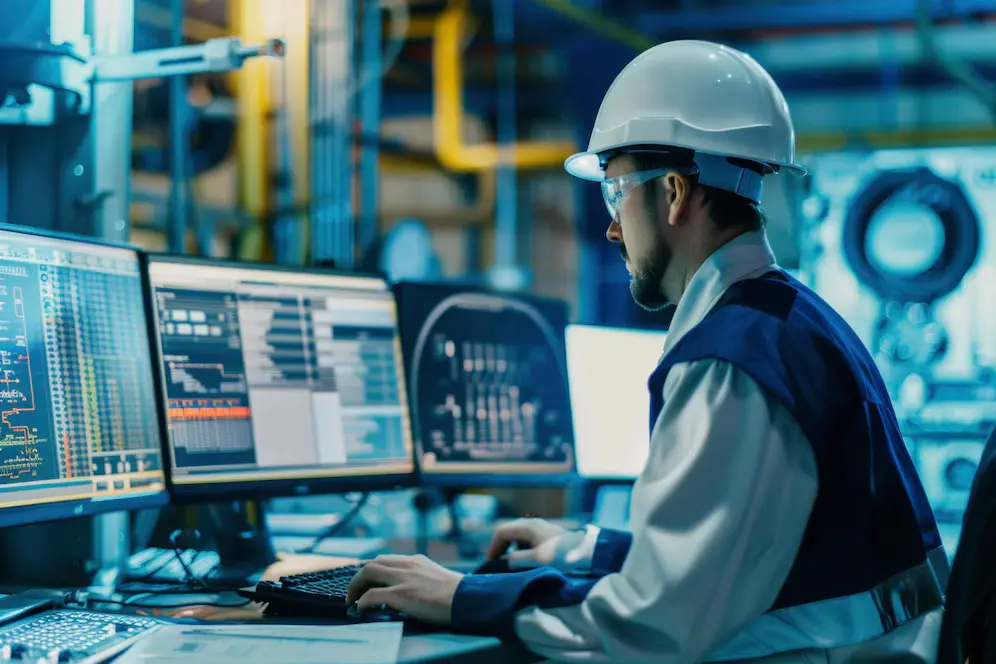
Explore key aspects of industrial process monitoring, from sensor selection to data analysis, to enhance operational efficiency and workplace safety.
In any industrial setting, understanding what’s happening within a process in real-time is not just beneficial, it’s essential. Whether it’s maintaining precise temperatures, monitoring fluid levels, or ensuring safe pressure ranges, effective process monitoring forms the backbone of efficient and secure operations. Many plant managers and engineers grapple with the complexity of selecting the right tools and interpreting the data they generate. This can lead to costly downtime, compromised product quality, and potential safety hazards.
Understanding the Fundamentals of Process Monitoring
At its core, industrial process monitoring involves using sensors and instrumentation to measure critical parameters within a manufacturing or production system. These parameters can include temperature, pressure, flow rate, level, and even chemical composition. The data collected from these sensors is then transmitted, processed, and analyzed to provide insights into the system’s performance. This allows operators to make informed decisions, identify deviations from normal operating conditions, and take corrective actions.
The goal is to achieve a state of continuous oversight. This means not just reacting to problems when they occur, but proactively identifying potential issues before they escalate. Reliable monitoring systems help maintain optimal operating conditions, reduce waste, and ensure that products meet quality standards consistently.
Deep Dive: Key Components and Considerations
Sensor Selection and Placement
Choosing the right sensor is paramount. Different applications require different sensor technologies. For instance, a high-temperature furnace will need a different type of temperature sensor than a chilled liquid system. Factors to consider include:
- Accuracy and Precision: How closely the measurement reflects the true value and how repeatable the measurements are.
- Environmental Conditions: Resistance to vibration, moisture, dust, chemicals, and extreme temperatures.
- Measurement Range: The minimum and maximum values the sensor can reliably detect.
- Response Time: How quickly the sensor can detect and report changes in the measured parameter.
- Connectivity: Compatibility with existing control systems and communication protocols.
Proper sensor placement is equally critical. A sensor placed too close to a heat source, for example, might provide inaccurate temperature readings for the bulk of the material. Understanding the process flow and potential points of concern guides optimal placement.
Data Acquisition and Transmission
Once data is collected by sensors, it needs to be acquired and transmitted to a central point for analysis. This often involves data acquisition systems (DAQ) or programmable logic controllers (PLCs). The method of transmission can vary:
- Wired Connections: Traditional and reliable for fixed installations, using protocols like Modbus or Ethernet/IP.
- Wireless Technologies: Offer flexibility and can reduce installation costs, especially in hard-to-reach areas. Common standards include Wi-Fi, LoRaWAN, and cellular.
- Industrial Fieldbuses: Specialized networks designed for robust communication in harsh industrial environments.
The choice depends on factors like the distance between sensors and the control room, the need for mobility, and the existing infrastructure.
Analysis and Visualization Tools
Raw data is only useful if it can be understood. Effective process monitoring relies on robust analysis and visualization tools. This can range from simple digital readouts to sophisticated supervisory control and data acquisition (SCADA) systems and human-machine interfaces (HMIs).
- Real-time Dashboards: Provide an immediate overview of key process variables.
- Trend Analysis: Allows operators to see how parameters have changed over time, identifying patterns or drifts.
- Alarm Management: Alerts operators to conditions that exceed predefined thresholds, helping to prevent issues.
- Historical Data Storage: Essential for troubleshooting, compliance, and long-term performance optimization.
These tools transform complex data into actionable insights, empowering operators to maintain control and make necessary adjustments.
Common Mistakes and Misconceptions
- Over-reliance on a single sensor type: Assuming one sensor can cover all needs without considering specific application requirements.
- Ignoring environmental factors: Deploying sensors in conditions they are not designed for, leading to premature failure or inaccurate readings.
- Inadequate data analysis: Collecting vast amounts of data but failing to implement effective methods for interpretation and action.
- Neglecting sensor calibration: Failing to regularly calibrate sensors, which leads to drifting measurements and unreliable data over time.
- Underestimating cybersecurity risks: For connected systems, not implementing adequate security measures to protect against unauthorized access or data breaches.
Practical Takeaways for Immediate Application
Start by auditing your current monitoring systems. Are your sensors performing optimally? Are the data points you are collecting truly relevant to your operational goals? Investigate opportunities to improve sensor accuracy and reliability. If you are struggling with integrating new technologies or understanding the vast amounts of data generated by modern industrial equipment, exploring comprehensive solutions from experienced providers can be highly beneficial. For a wide range of industrial sensing, connection, and interface technologies, you can explore resources at https://www.ifm.com/ca/en.
A Decision-Maker’s Perspective
From a management standpoint, the decision to invest in or upgrade process monitoring systems often comes down to a cost-benefit analysis. The upfront investment in quality sensors, robust data acquisition, and effective analysis software can seem substantial. However, the long-term benefits in terms of reduced downtime, improved product quality, minimized waste, and enhanced safety can yield significant returns. It’s about shifting from a reactive maintenance approach to a proactive, data-driven operational strategy.
Looking Ahead: The Future of Process Monitoring
The trend in industrial process monitoring is increasingly towards intelligent, connected, and predictive systems. The integration of AI and machine learning is enabling systems to not only detect anomalies but also to predict potential failures before they occur, allowing for scheduled maintenance and preventing costly disruptions. The move towards Industry 4.0 emphasizes the importance of seamless data integration across the entire production chain, creating truly smart factories.
Also Read-Unlocking Youthful Skin: The Wonders of Microneedling Pen Technology