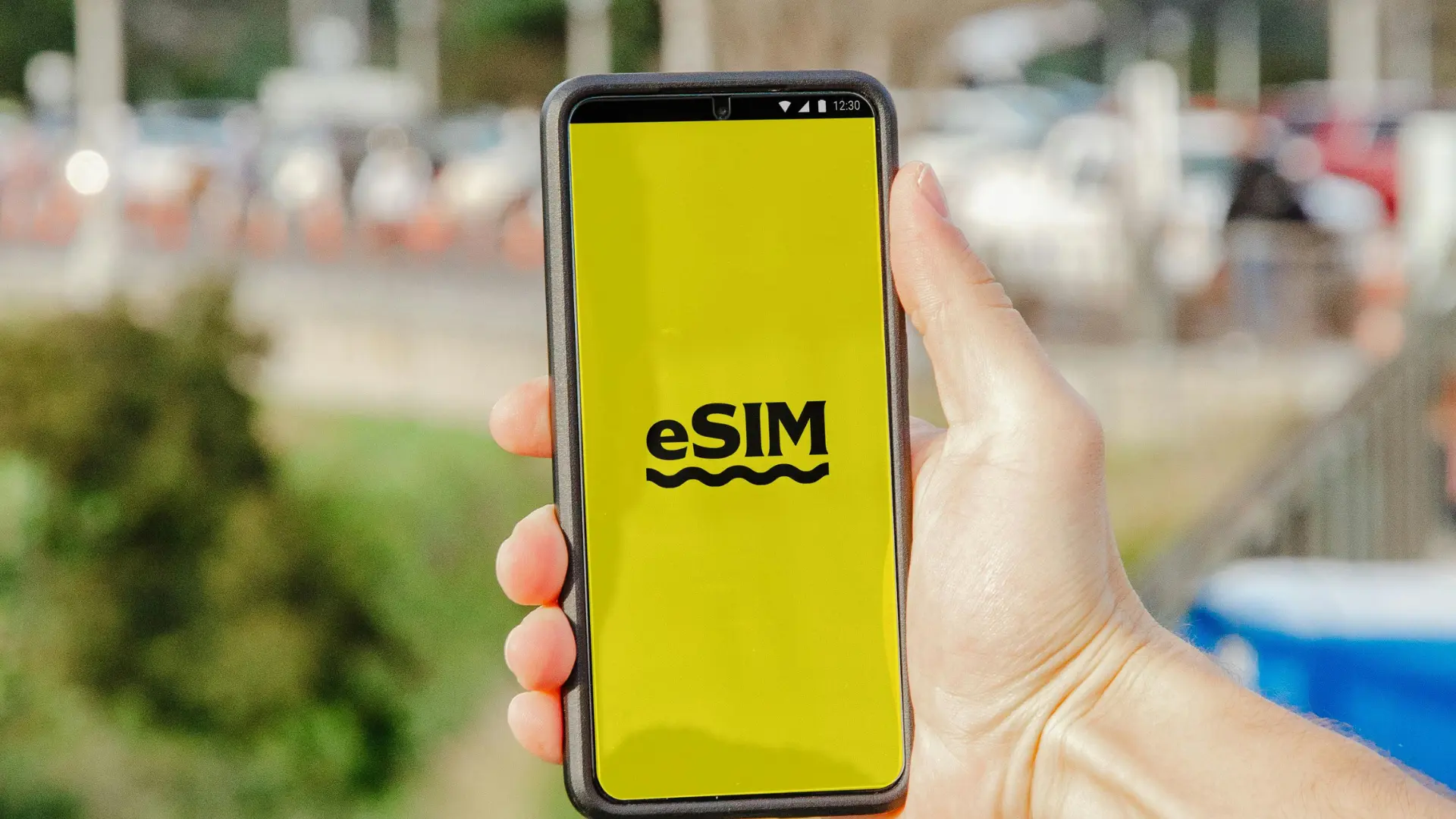
Traveling to another country used to mean swapping SIM cards, hunting for local carriers, or paying high roaming fees. It could be confusing, time-consuming, and sometimes stressful especially right after landing. But now, eSIM technology is changing all of that. With just a few taps on your phone, you can connect to a local network before you even leave home.
No tiny cards to lose, no long lines at airport kiosks, and no guesswork. Whether you’re a frequent traveler or planning your first international trip, eSIM makes staying connected easier than ever.
In this blog, we’ll explore how eSIM is making travel smoother, smarter, and far more convenient for everyone.
The New Era of Connected Travel: Why eSIM Adoption Is Accelerating
Global travel has always demanded reliable connectivity. What’s changed is how attainable that connectivity has become and how dramatically the friction has dropped.
Here’s the core mechanic: an eSIM is a chip embedded directly inside your phone. No physical card. No tray. No eject tool hunting through your carry-on. You download a carrier profile remotely via QR code, and within minutes, you’re live on a network. What makes this genuinely powerful for travelers is that one device can hold multiple profiles simultaneously and switch between them without ever touching a counter or speaking to a carrier rep.
According to a December 2024 report, 90% of current eSIM users report satisfaction with the experience. That’s not a marginal number. Apple, Google, and Samsung have been quietly migrating toward eSIM-only and dual-eSIM hardware for several years now, which means this is no longer a niche traveler trick, it’s steadily becoming the baseline expectation.
Key Ways eSIM Is Transforming International Trips
The impact doesn’t land all at once. It compounds across every stage of your journey from planning through landing to crossing your third border of the week.
Pre-Trip Planning With Travel eSIM Benefits
The shift starts well before you board.
Travelers can now buy esim online and activate plans days ahead of departure from their couch, at a reasonable hour, without anyone rushing them. You scan a QR code, label the profile, and test the connection before your bags are even packed. That kind of pre-departure control didn’t exist five years ago.
The data reflects this behavioral change: 75% of travelers now secure connectivity before their trip. Pre-departure planning has become the norm, not the exception. A practical setup checklist worth running through:
– Confirm your device is unlocked and eSIM-compatible
– Choose between country-specific, regional, or global eSIM plans
– Install and label your profile, then disable home data roaming before takeoff
Less stress at arrival. No language-barrier negotiations at a foreign carrier shop at 11 p.m. The travel eSIM benefits here are straightforward and real.
Landing in a New Country With Instant Connectivity
The moment of truth is when the wheels hit the tarmac.
Old experience: queue at a kiosk, fumble through packaging you can’t read, miss your pickup. New experience: toggle on your profile as you step off the jetway and pull up navigation before baggage claim. That’s not a best-case scenario, it’s genuinely standard. Global eSIM plans make this particularly effective for multi-country itineraries. Whether you’re moving across Schengen countries or hopping between Southeast Asian markets, a single plan can carry you across multiple borders without one physical swap.
Staying Connected Across Multiple Countries
Where eSIM really earns its reputation is during sustained travel.
Dual-SIM strategies are worth understanding here. Keep your home number active either on a physical SIM or your device’s embedded line for calls, banking OTPs, and two-factor authentication. Run your travel eSIM alongside it for apps, navigation, and data. For remote workers especially, this configuration matters. Missing a bank verification code mid-trip because you swapped your number out is the kind of thing that derails an otherwise smooth work day abroad.
Switching between regional and global profiles in settings takes seconds. No tools, no counters, no waiting.
Why Travelers Are Choosing eSIM Over Traditional Roaming
Four advantages consistently drive the switch.
Dramatic Cost Savings and Predictable Pricing
Carrier roaming rates can run $10–$15 per day. A comparable travel eSIM plan frequently costs a fraction of that, sometimes under $20 for an entire week of solid data. Global eSIM plans with fixed data caps give you a clear spending picture before departure, which matters when you’re managing a travel budget with any seriousness.
Freedom From Physical SIM Cards
No queuing. No ejector tools. No instructions printed in a language you don’t read. Solo travelers arriving late at night, families managing young children, business travelers with 45-minute connections everyone benefits from simply skipping that process. It’s one less variable in an already variable experience.
Better Security While Abroad
Physical SIM theft is a legitimate risk in certain destinations. With eSIM, there’s nothing to extract from your tray. Many providers now include VPN options and encrypted profile provisioning. Beyond that, having reliable mobile data reduces your exposure to public Wi-Fi networks at cafés and airports which remain a genuine security concern for frequent travelers.
Choosing the Best eSIM for Travel: A Practical Framework
Knowing why eSIM wins is the easy part. Picking the right plan requires a bit of structure.
| Traveler Type | Best Plan Type | Key Priority |
| Weekend vacationer | Country-specific | Low cost, simple setup |
| Multi-country backpacker | Regional plan | Border flexibility |
| Digital nomad | Global eSIM | Continuity + hotspot |
| Corporate traveler | Business global plan | Billing + security |
When evaluating providers, look at real per-GB cost rather than the headline price. Confirm whether hotspot tethering is included; this matters significantly for remote workers. And verify device compatibility before purchasing; not every phone sold in the US supports every carrier’s eSIM provisioning, particularly older or carrier-locked models.
The best eSIM for travel isn’t automatically the cheapest one. It’s the plan that maps cleanly onto your actual itinerary and usage habits.
Final Thought: Is eSIM the Future of Travel Connectivity?
Calling it a “future” technology undersells it eSIM is what millions of travelers are using right now to land connected, spend less, and skip airport headaches entirely. The combination of pre-trip setup, dual-SIM flexibility, cost predictability, and genuine security improvements makes a compelling case. If your phone supports it and you travel even occasionally, the switch is worth making. Your next trip can begin the moment you touch down not an hour later at a kiosk counter, hoping the person in front of you speaks your language.
Common Questions About eSIM for International Travel
- Can I keep my regular phone number while using an international eSIM abroad?
Yes. Dual-SIM setups keep your home number active for calls and two-factor authentication while your travel eSIM handles data. Most current iPhones and Android flagships support this without additional configuration. - Is a global eSIM plan better than buying local SIMs in each country?
It depends. Global plans win on convenience across multi-country routes. Country-specific plans often deliver lower per-GB costs for single-destination trips. For backpackers crossing several borders, a global plan is almost always the more practical choice. - Does adding an eSIM affect WhatsApp or other messaging apps?
No. WhatsApp ties to your phone number, not your data SIM. As long as your home number stays active on your device, your messaging apps continue functioning without interruption when you switch to a travel eSIM for data.
Also Read-Why Transparent Communication Is Vital In Accounting Firms