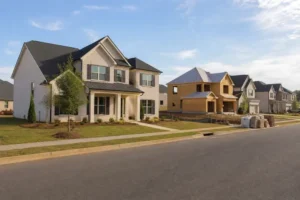
Many property owners think a house builder enters the picture when the ground is cleared and leaves when the keys are handed over. That version sounds neat, but it misses the real work. Most of what keeps a residential build on track happens in planning meetings, site reviews, schedule adjustments, trade coordination, and dozens of decisions the owner may never see directly.
That is why the builder’s role matters far beyond construction labor. For homeowners, property owners, and project stakeholders, a house build is not just a sequence of materials arriving on site. It is a managed process that must move from concept through permitting and construction to final turnover without losing control of cost, timing, or quality. A capable builder is the person responsible for keeping those moving parts aligned from the first conversation to the last inspection.
The Work Starts Before Groundbreaking
- Why Planning Shapes The Whole Build
A house builder’s job starts well before concrete is poured or framing begins. Early involvement often includes reviewing plans, discussing the site, identifying probable cost drivers, and flagging problems that could interfere with approvals or construction later. The builder may assess access to the lot, grading issues, utility availability, drainage concerns, and the design’s compliance with local development rules. Without that early review, a project can look feasible on paper while hiding delays and added cost in the field.
- Design Review Must Meet Reality
A house design can be visually strong yet difficult to build efficiently. That is where a builder adds practical value. Owners interested in projects such as ADU tiny homes in Portland often discover that layout, access, setback limits, utility connections, and structural choices all affect the final build far more than they expected. The builder helps bridge the gap between an appealing plan and a buildable one, ensuring the project can proceed through the site’s real conditions rather than only through drawings.
- Budget Control Starts Early
One of the builder’s most important responsibilities is to help define the project’s financial shape before the work accelerates. That means looking beyond base square footage and talking honestly about site work, foundation conditions, utility runs, finish levels, permits, and the hidden costs that often surprise owners later. A strong builder does not simply repeat a hopeful number. The builder helps the owner understand what the project is likely to require and where cost pressures are most likely to arise.
This early budget clarity matters because residential projects often go wrong through accumulation, not one dramatic mistake. A few underestimated allowances, a few optimistic assumptions, and a few unplanned site issues can change the entire budget. Builders help narrow that uncertainty before it multiplies.
- Permits And Approvals Need Management
Owners often underestimate how much coordination goes into it before physical work becomes visible. Permits, plan review comments, engineering responses, and utility approvals can all affect when the build actually starts. A house builder usually helps keep those items moving by tracking requirements, confirming that documents are aligned, and ensuring the project is not stalled by missing information or poorly timed submissions.
This is where the builder’s role becomes less visible but more important. Delays in approval do not just cost time on paper. They affect contractor scheduling, material timing, and the owner’s entire planning window. A builder who stays ahead of that process helps prevent the job from losing momentum before the first phase begins.
- Scheduling Trades Is Core Work
Once construction starts, one of the builder’s biggest jobs is sequencing the work. A house is not built by one crew moving steadily from start to finish. Excavation, foundation work, framing, roofing, plumbing, electrical, HVAC, insulation, drywall, flooring, cabinetry, painting, and finish carpentry all have to happen in the right order. Each phase depends on the earlier phase being ready.
That means the builder is constantly managing timing. Materials have to arrive when needed. Trades have to be booked at the right moment. Inspections must be completed before the next layer of work can proceed. When people say a builder “runs the job,” this is a large part of what they mean. The builder is holding the sequence together.
The Real Job Is End-To-End Control
A house builder does far more than oversee labor on a jobsite. The role includes early planning, budget alignment, permit coordination, schedule control, trade management, problem solving, quality oversight, communication, and final turnover. Each one of those tasks affects whether the house is delivered with control or with constant friction.
That is the practical takeaway for owners. A successful build is not created only by good plans or good materials. It is created by someone managing the entire path from concept to completion with steady judgment. The builder’s real job is to keep the project buildable, coordinated, and moving forward, even when the inevitable complications of construction try to pull it off course.
Read more: AC Repair Solutions for Uneven Cooling in Rooms
Why Clear Writing Matters More Than You Think
Daftar Slot Gacor di SUPER DEWA Maxwin Pasti 100% Cair